
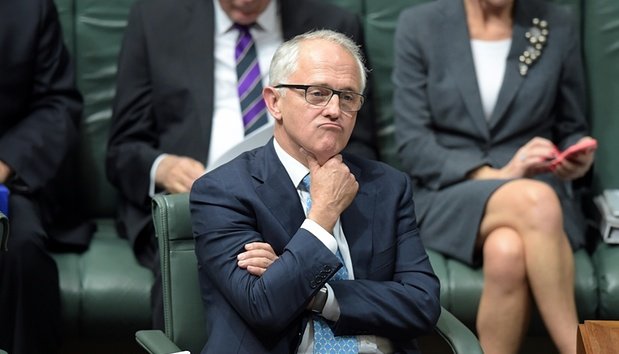
When Malcolm Turnbull took over the reins as the Prime Minister of Australia, one of the more popular changes he brought with him was to increase Australia’s focus on innovation and entrepreneurialism. “There has never been a better time to be an Australian”, he declared (perhaps to some scepticism), but the idea was a bit of a winner for him. Who doesn’t think that entrepreneurialism is a good thing? Even communist countries around the world are promoting greater innovation and entrepreneurialism, because the alternative, bureaucratic, centrally controlled economies, are poor at even doing the basics like feeding their own people (they make for excellent ballet and support great novelists for reasons I am sure others have covered at great depth). Beyond the initial feel good statement, the proposition raises the question, how well are we doing compared to other countries and where do we need to improve? Well, there is some good news and some bad news.
(This is quite a long post, so I am summarising the key points here. Read on beyond the summary if you want the gory detail.)
Summary
- Australia compares well internationally in terms of entrepreneurialism and business start-ups.
- Due to a poor financial support system for new business start-ups, Australian start-ups are usually small and often self-funded by the founders.
- As a nation we admire entrepreneurs, but don’t think it is such a good idea to become one. Our fears may be over-exaggerated due to a misinterpretation of data in the past which has led us to over-estimate the likelihood of business failure.
- The type of people who are entrepreneurs can best be described as ‘Australian’. There is very little demographically that distinguishes an entrepreneur from the rest of the population.
- More than half of start-ups have at least one founder who has been involved in business start-ups before
- Our governments make it easy for us to start a new business, but compared to our global competitors, they are less willing to help support us doing so. We do however, have one of the most generous R&D tax rebates in the world.
- The ability of entrepreneurs to extract value from our universities is pretty poor. There is an important role for universities to help to improve these metrics, but there is also a need for government policy reform to extract the greatest value from any efforts made by universities to better engage with industry.
- It is as good a time as any to become an entrepreneur, but there is nothing special about the times we live in (sorry Malcolm).
Our entrepreneurial activity
The good news is that Australia has one of the highest rates of Entrepreneurial Employee Activity (EEA) in the world (8% of the adult population), and most of this is driven by a desire for individuals to innovate. Because Australia is a wealthy country, with globally low rates of poverty, much of our entrepreneurial activity is defined as ‘improvement-driven opportunity’. Improvement driven entrepreneurs (IDOs) see opportunities to improve their work situation, see a promising opportunity, or see good conditions in the environment to start a business.
In countries with higher unemployment and less generous welfare payments, a higher proportion of entrepreneurs are ‘necessity driven’ entrepreneurs. For these entrepreneurs, necessity really is the mother of invention, and they are starting their own businesses to survive. The US has more of these types of entrepreneurs than Australia as a proportion of the population.
What stops more Australians becoming entrepreneurs?
Australians have a high fear of failure compared to the rest of the world. We see more business opportunities but downplay our capabilities to take advantage of them. We admire other entrepreneurs much higher than we identify entrepreneurship as a good career choice. To summarise, Australians on average are a little bit timid when it comes to taking a punt on starting up a new business, but we admire those who do.
We may be basing this fear and timidity on misperceptions of risk. I remember being told many times in various training businesses courses when I was younger that a very large share (eg 90%) of all start-ups fail within the first few years. It turns out that these claims have been grossly exaggerated. The reasons are: 1) some apparent “failures” occur in the data because on-going businesses are re-assigned to a new code due to changes in legal form, ownership, or main industry, and 2) even when firms are terminated (as independent entities) they may be sold at a profit or voluntarily closed without financial loss (e.g. due to retirement). The picture looks more rosy with better data. When surveyed, about a third of new firms have reached an operational status, about a third have terminated, and about a third are still trying to achieve venture creation. It is probably true that about 50 per cent will ever reach operational status, but these are much better odds than many people a led to believe, and matches more closely my own experience.
Once a firm is operational, it has pretty good odds of surviving. The vast majority of young firms (78 per cent) continue to be active in the market the last time they were surveyed. The annual termination rate for young firms is 14 per cent cumulatively, while young firms with an uncertain status is 8 per cent cumulatively.
What is our business environment like?
Compared to the rest of the world, we rank higher in terms of reduced government red tape and school age education in entrepreneurship, but lower in terms of government support for new business creation, post-secondary education in entrepreneurship and slightly behind the global average in terms of access to finance. Our governments make it easy for us to start a new business, but compared to our global competitors, they are less willing to help support us doing so. Where we shine is in the R&D tax incentive scheme which is the second or most generous scheme in the OECD in relative terms. I wonder if it is as effectively targeted as it could be.

What type of person becomes an entrepreneur?
I have read all sorts of lies about what makes a good entrepreneur. Being organised is probably a pretty good trait but I know a number of successful entrepreneurs who are so disorganised, I wonder how they even get dressed in the morning. Not all entrepreneurs wear hoodies, live on Udon noodles and go to hackfests. In fact, the data suggests that entrepreneurs have no defining traits or demographic characteristics at all. Founders are spread across all age groups. Immigrants are neither over- nor under-represented. Women are marginally under-represented as firm founders (access to capital a constraint maybe?), and there are gender differences regarding what type of firms are created. Females are under-represented in construction and manufacturing and dominate retailing, health, education and social services.
What is interesting is that more than half of the start-ups have at least one founder who has been involved in business start-ups before, which is pretty sensible when you think about it. Increased industry experience improves a venture’s chance of survival; it increases the likelihood of employment generation, and allows young firms to derive larger profits.
Where do we get our money to start our businesses?
It is unsurprising to me that Australian entrepreneurs rely heavily on personal savings to provide capital for their business (more than 50 per cent of all start-ups). In the training sessions I have been to, the ‘3 Fs’—friends, family and fools’ are often described as being common sources of new business venture funding, but I don’t think any of them are particularly good sources. I don’t want fools involved in my business, I would only involve family who had the right skillset and I’ve lost more than one friend from business deals that went wrong.
The data suggests that funding by business angels and venture capital firms is close to non-existent in this country.I have to say that as a entrepreneur myself, I have found angel investors to be often either inexperienced and lacking the skills I have needed, or on an ego trip. There ARE a few very good angel investors I have met, but they are few and far between. Venture capital in Australia is limited and mostly predatory. Good entrepreneurs can do much with seemingly little, and let revenue from the market fund the development of the business. What this does mean is that most Australian start-ups are relatively small-scale, and most stay that way.
How innovative are Australian businesses?
Most small business start-ups in Australia are not innovative. Many are simply starting up a business as consultants, contractors and retailers. Small businesses often also don’t have the capital to invest in R&D. In 2010–11, all businesses spent around $17.9 billion on R&D, with small businesses spending approximately $2.3 billion (of which $0.8 billion was accounted for by micro businesses). This is below the $3.4 billion spent by medium businesses and $12.2 billion spent by large businesses. Small business expenditure on R&D represented around 0.7 per cent of small business industry value added in 2010–11, while medium business expenditure on R&D represented approximately 1.6 per cent of medium business industry value added and large business expenditure on R&D represented around 3.1 per cent of large business industry value added. (The data is old because this quality of data is collected during the census, due again this year!).
What is the role of universities in supporting innovation and entrepreneurship?
Australia’s performance in research is about on par with the average of its peers. But the translation of our research into economic goods and services is poor by global standards.
- Australia has a dismally low investment in start-up capital. We invest just $4.5 per capita in start-up capital compared to $120 in Israel, $85 in the US, $20 in South Korea and $15 in the UK.
- Business enterprise expenditure on R&D is below the OECD average (1.2% compared to 1.6%)
- 30 per cent of Australian researchers are in the business sector by contrast with 80 per cent in the US, 64 per cent in Switzerland and 70 per cent in Japan.
- A recent World Economic Forum report noted that Australia’s start-up ecosystem lags behind those of many other developed nations. They identified a lack of emphasis on entrepreneurship education, limited engagement with universities, and low cultural support for entrepreneurs.
In a number of studies to understand why some universities generate more industry engagement and new companies to exploit their intellectual property, there are three drivers that stand out:
- Quality of research. This is not surprising. More unique and leading edge research is likely to yield more opportunities for setting up businesses that have a competitive advantage based on new and better knowledge and/or technology.
- University policies and culture to encourage entrepreneurship and industry engagement such as clear policies on spin-outs, a royalty policy that encourages external investment, a willingness to engage ‘surrogate’ (external) entrepreneurs.
- Regional factors such as the presence of an ‘entrepreneurial ecosystem’, low unemployment, population size and language skills are important factors that enhance the translation of research to industry and are outside the direct control of the university. There is an important interaction with the culture of the geographical area within which the University sits and the ability of a university to translate new knowledge into business opportunities.
Is this the best time to be an Australian entrepreneur?
I don’t think it is either a particularly good or bad time – but perhaps it is as good a time as any. Australia is a great place to start a business, and many start-ups survive. Its hard for startups to get beyond being a small business because of the lack of start-up capital. A comparatively large number of us will continue to do so, even though we are a bit scared by the whole idea.
References
ABS Cat. No. 8155.0. Industry value added only refers to the private sector.
http://www.chiefscientist.gov.au/2013/02/benchmarking-australian-science-performance/
Organisation for Economic Cooperation and Development (OECD) (2012) Main Science and Technology Indicators, January 2012.
http://www3.weforum.org/docs/WEF_EntrepreneurialEcosystems_Report_2013.pdf
Australian Small Business: Key statistics and Analysis. December 2012. DIISRTE
Benchmarking Australian Science Performance. Office of the Chief Scientist. February 2013. Issue 6.
Scientific Relations Between Academia and Industry: Building on a New Era of Interactions for the Benefit of Society. Report from an International Workshop on Academia-Industry Relations, Sigtuna, Sweden, 22-25 November 2011
Pittz, T.G. (2014) A model for Experiential Entrepreneurship Education. Journal of Business and Entrepreneurship. 26(1)
Wilson, T. (2012) A Review of Business-University Collaboration.